
Sensors and Actuators
Sensors and actuators are a growing commercial market with the Internet of Things (IOT) and the interest to remotely monitor and control many devices.

S-Bond® active solders are finding more application in sensors and actuator devices due to their use of dissimilar materials, including metals, intermetallics, ceramics, composites and glasses which need to be joined. S-Bond® active solders are unique in that they can join such materials, without flux or plating, at low temperatures and with excellent conductivity (both electrical and thermal).
S-Bond® active solders can bond…
- All metals (Al, Cu, St. Steel, Ti, W, Mo, Ni, etc)
- Ceramics (Al2O3, SiO2, Sapphire, Quartz, Zirconia, AlN, Si3N4, etc)
- Carbon / Carbides (SiC, TiC, WC, Graphite, Diamond, etc)
With Ce, Ga and Ti additions to solder filler metals, S-Bond® solders can bond direct to oxides, nitrides and carbides that have formed on metal surfaces, directly. On aluminum and copper the Ga and Ce interact with the oxides that form on these metals then the Sn and Ag constituents form metallurgical intermetallic compounds (IMC’s) that chemically bind the solder to the aluminum or copper base metal. With the active S-Bond® solders’ ability to wet, adhere and join such a diverse set of materials, the S-Bond® alloys find wide application in sensors and actuators that employ a diverse array of materials and in dissimilar material joints… These joints have many requirements, depending on the application, these requirements include…
- Thermally conductive
- Electrically conductive
- Transmits sound
- Hermetically seals
- Bond strengths high enough for the application
- Low temperature joining
- Accommodation of CTE mismatch strain
Sensors and Actuators that S-Bond® is currently specified in includes…
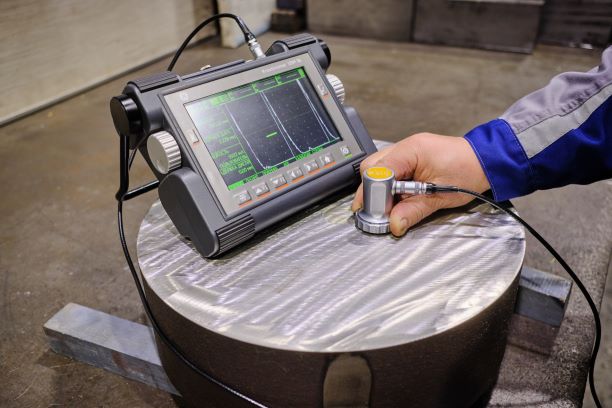 Piezo ceramic (PZT) – Ultrasonic Gas Flow sensors; PZT ceramic disks are S-Bond® soldered to stainless steel housings that transmit and receive u/s sound pressure waves. The transmit sensor with bonded PZT piezo ceramic disk sends u/s waves into a passing gas flow and a receive sensor with bonded PZT receives and converts the sound waves… with a shift in frequency known as the Doppler effect, can relate the frequency shift to the mass flow of the passing gas stream. In these sensors, the piezo ceramic disk needs to be intimately bonded with no voids to create an acoustically “hard” transmitting bond interface, joining the ceramic to metal below the curie temperatures of 250 C. S-Bond® 220 alloys are being used to make these reliable and acoustically sound interfaces.
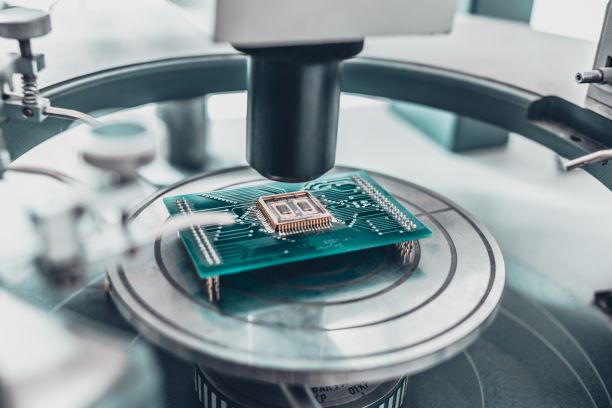 MEMS Pressure Gages; Silicon based MEMS devices us Si-dies and incorporate circuitry to use the Si as part of the measurement. In the case of pressure measurements, thin diaphragms of Si are created and strain gage circuitry is deposited using lithography to complete the sensor… the challenge then was so seal the Si-sensor die to a metallic pressure housing that is installed onto the component needing a pressure sensor. S-Bond® active solders can join Si direct to metals and can create a hermetic joint, creating a seal between the Si-MEMS pressure sensor and the mounting housing.
 Graphite Electrodes / Water Conductivity Sensors; S-Bond® active solders are being used to join graphite to electrical leads for use in Anode/Cathode systems for making excellent electrical solder connections with the use of flux or pre-plating.
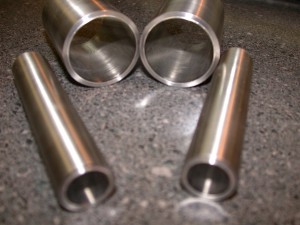 Sapphire – Optical Sensors; Sapphire is single crystal aluminum oxide that is very hard/scratch resistant and also transits optical signals in a specific spectrum. As sapphire is an excellent “window” material for many optical signals. For example in Gamma Ray Detection, NaCl single crystal creates photon (light) output proportional to the impinging gamma ray radiation intensity. The NaCl crystal will degrade/dissolve in contact with air, to the crystal is housed behind a sapphire window which is S-Bond® active solder sealed (hermetic/He leak free) to a titanium tube to create a sealed environment that the gamma rays can penetrate. Optical detectors are then mounted in front of the sapphire window, outside the S-Bond® sealed enclosure.
Insulators /Radar Sensors; Printed 3-D circuits are being made to generate / receive radar signals. These circuits are built through ceramic layers that form a ceramic backbone to the sensors’ circuitry. S-Bond® active solders have been used to bond the edges of this ceramic backbone of the sensor and seals it from the environment.
Magnet Assemby – Actuators; Magnetic actuators are used to move valves, switches and other devices dependent on precise and reliable stroke based motion. Such magnetic actuators are using high force as CoSm based magnets. These magnets will form a strong and specific magnet fields. In one actuator design, the actuator “rod” runs on the magnet assemblies’ magnetic axis. To assure optimal actuator lineal translation, the actuator’s central push rod could not be magnetic, so it a ceramic rod was selected. In this actuator, S-Bond® active solders have been used to bond the central ceramic rod to the magnetic core of the actuator.
As presented here, S-Bond® solders are being applied in a growing range of sensors and actuators. If you would like to take advantage of S-Bond® solders unique capabilities to join dissimilar materials in your sensors and actuators, please Contact Us.